
-
Solid 925 Sterling Silver Small Pinch Clip Bail Pendant Clasps Connector, jewelry DIY silver findings/components
Regular price $9.98 USDRegular price$12.48 USDSale price $9.98 USDSale -
Sterling Silver Clip On Pinch in Pendant Bail Connectors Clasp Slider for Jewelry Making
Regular price From $16.26 USDRegular price$20.33 USDSale price From $16.26 USDSale -
solid 925 sterling silver bail pendant clasp connector, pinch bail with ice-pick for necklace & pendant silver jewelry, S
Regular price From $3.20 USDRegular price$4.00 USDSale price From $3.20 USDSale -
Solid 925 sterling silver blessing pendant clasp connector, Thai Silver pinch bail for necklace & pendant silver jewelry
Regular price $31.58 USDRegular price$39.48 USDSale price $31.58 USDSale -
Solid 925 sterling silver bat pendant clasp connector, Thai Silver pinch bail for necklace & pendant silver jewelry
Regular price $30.46 USDRegular price$38.08 USDSale price $30.46 USDSale -
solid 925 sterling silver pendant clasp connector, rhodium plated pinch bail for necklace & pendant silver jewelry, 1 piece
Regular price $7.00 USDRegular price$8.75 USDSale price $7.00 USDSale -
solid 925 sterling silver bail pendant clasp connector, pinch bail with cup peg for necklace & pendant jewelry, 1 piece
Regular price $18.98 USDRegular price$23.73 USDSale price $18.98 USDSale


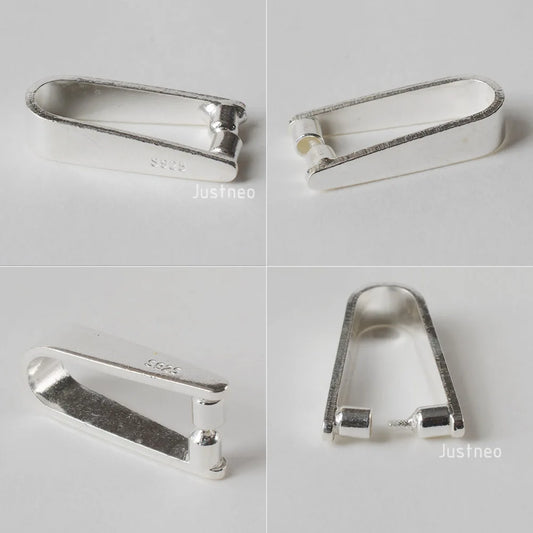

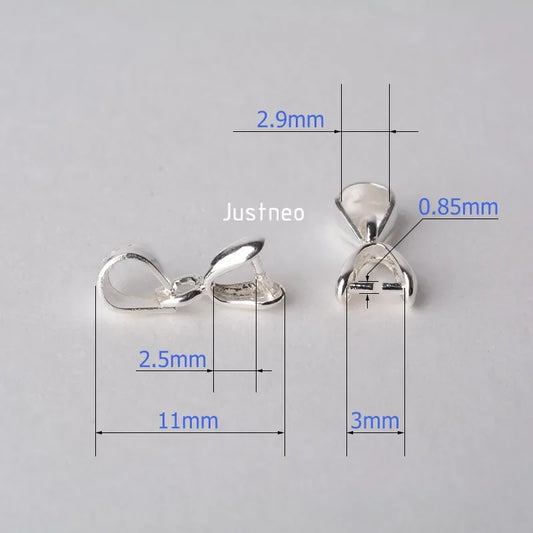

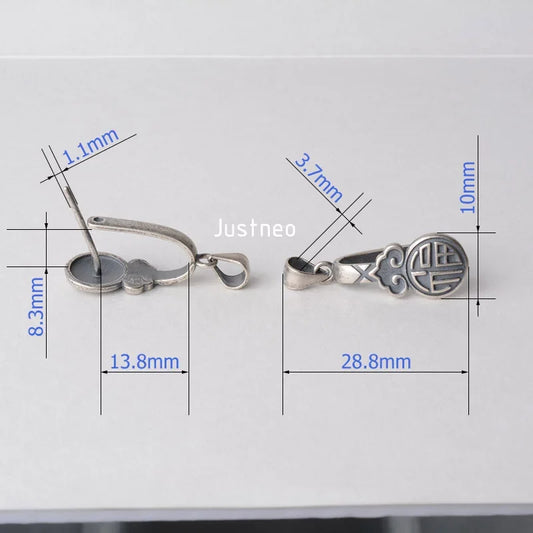


Collection: Sterling Silver Bails
What Are Sterling Silver Bails?
Sterling silver bails are jewelry findings that create a connection between a pendant or other suitable decorative element and the chain, cord, or necklace material from which it hangs. Made from sterling silver, including 925 sterling silver where applicable, these components provide a practical suspension point while also influencing how the pendant sits and appears within the finished design.
As a specialized category within sterling silver findings, pendant bails are designed for a specific role rather than functioning as general-purpose connectors. Depending on the individual product, a bail may attach directly to a pendant, charm, stone, or another compatible decorative element, while its upper opening or loop accommodates the necklace material. Because both sides of this connection must be compatible, the same bail will not necessarily suit every pendant, chain, or cord.
Visual scale is also important. A small, understated silver bail can keep attention centered on the pendant, while a larger or more decorative design may intentionally remain visible as part of the jewelry composition. This makes the bail both a functional finding and a component whose proportions can influence the finished appearance.
Types of Sterling Silver Bails
Different bail constructions may be available depending on the individual product. Sterling silver pinch bails are designed to connect with suitable attachment points on pendants, while sterling silver snap-on bails use a different attachment construction. Other pendant bail styles may feature loops, openings, or attachment arrangements intended for particular types of decorative components.
These variations are useful because pendants themselves are not standardized. Attachment points can differ in position, size, and construction, while the upper portion of a bail can vary in the amount of space available for chain or cord. Shape also affects how noticeable the finding becomes once the necklace is assembled. Product dimensions and the intended attachment method therefore provide more useful information than the bail style name alone.
Not every construction or size is represented in every product, and individual 925 silver bails should be evaluated according to their listed specifications. For a broader explanation of how bails relate to clasps, jump rings, connectors, pins, and other silver components, the Guide to Sterling Silver Findings provides additional context.
Sterling Silver Bails for Pendants and Necklaces
Choosing a pendant bail involves considering both sides of the connection. On one side is the pendant or decorative element, including its dimensions and the type of attachment point it provides. On the other is the chain, cord, or other necklace material that needs to pass through the bail. A finding can be suitable for the pendant yet still have an opening that is too small for the intended necklace material, or the reverse.
Measurements are therefore particularly important when comparing bails for pendants. The dimensions of the attachment area should correspond with the pendant construction, while the opening or loop must provide sufficient clearance for the selected chain for jewelry making or cord. Chain thickness alone may not tell the full story, since end components or connecting rings can also affect whether the necklace material can pass through the bail.
Proportion provides another useful point of comparison. A very small bail paired with a substantial pendant may create a different visual balance from a larger finding, while an oversized decorative bail can become prominent beside a delicate focal element. Designs incorporating gemstone beads for necklaces may also include separate pendants, in which case the bail can be considered in relation to the scale and color of the surrounding beads without implying that the beads themselves require bail attachments.
Because photographs cannot always communicate opening dimensions or attachment clearance accurately, checking the measurements provided for the individual product is important. Compatibility depends on the actual pendant construction and necklace components rather than appearance alone.
Combining Sterling Silver Bails with Other Jewelry Findings
A bail may form only one part of the connection around a pendant. Depending on the design, jump rings can provide additional articulation, connectors can join separate sections, and chain components may influence how the pendant is positioned on the necklace. Charms and other decorative elements can involve their own attachment arrangements. These components belong to the wider category of jewelry findings, but each performs a different function within the finished piece.
Coordinating visible metal components can help the pendant area integrate naturally with the rest of the necklace. Similar silver finishes provide visual continuity, while compatible dimensions keep the bail, connecting rings, chain, and pendant in proportion to one another. A subtle bail can visually recede between the pendant and necklace, whereas a more noticeable design can contribute intentionally to the overall composition.
This collection allows shoppers to compare sterling silver pendant bails by construction, dimensions, opening size, attachment style, and visual scale. Considering these characteristics alongside the intended pendant and surrounding necklace components provides a practical basis for determining which bail designs are compatible with a particular project.
